Related

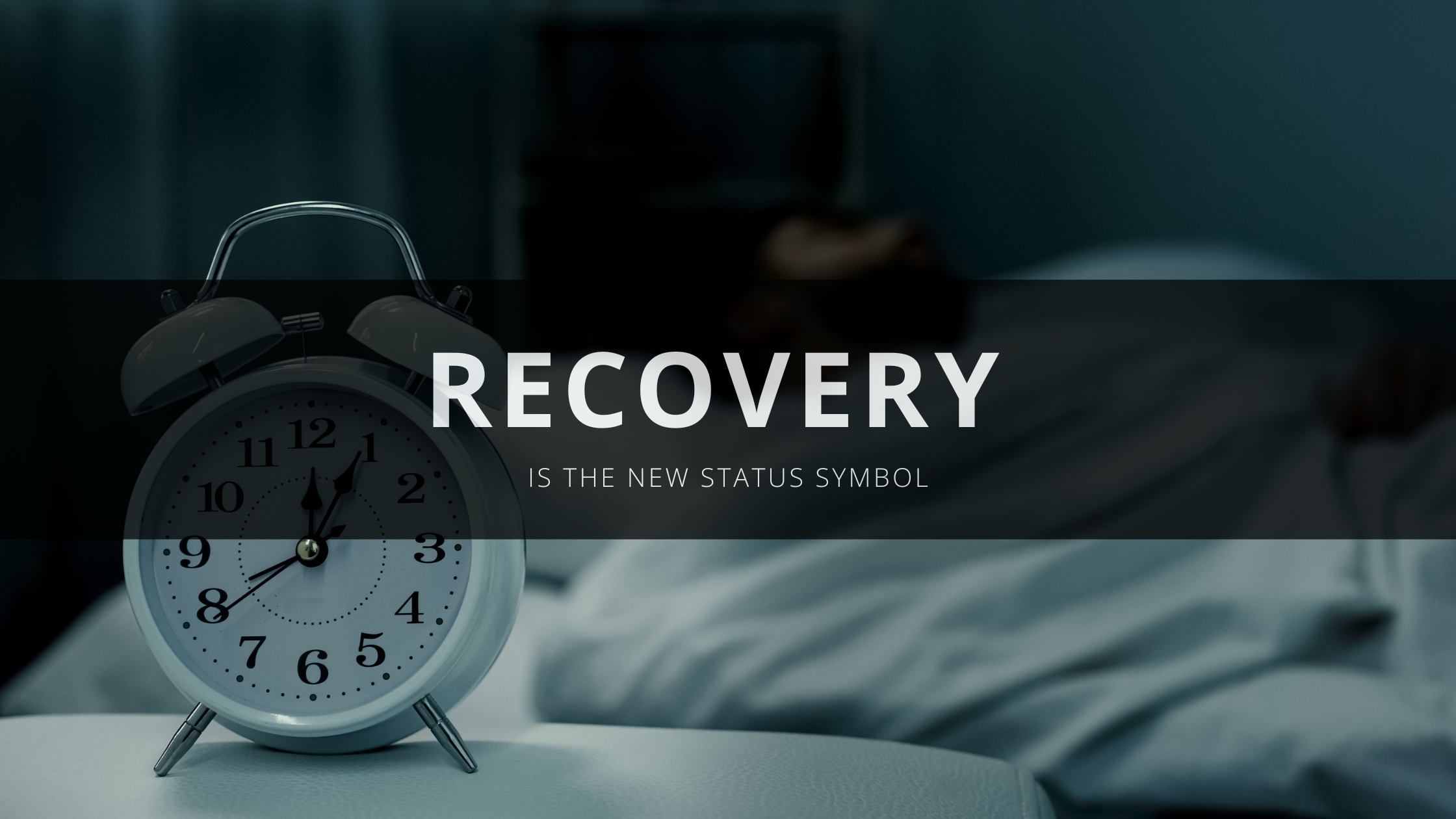
Recovery Is the New Status Symbol
For a long time, fitness culture celebrated one thing above almost everything else: doing more.
More workouts. More miles. More sweat. More intensity. More days in the gym.
Being sore was a badge of honor. Rest days made people feel guilty. If you weren't exhausted after your workout, did you even work hard enough?
But as our understanding of performance, longevity, and health has evolved, so should the way we think about fitness.
Because the goal isn't to see how much stress your body can tolerate.
The goal is to build a body that continues to perform well for decades.
And that requires recovery.
Training Is Only Half of the Equation
Every workout places stress on your body. That's not a bad thing—it's actually the point.
When you strength train, run, or perform conditioning work, you're giving your body a stimulus. Your body then responds to that stimulus by repairing, rebuilding, and adapting.
That's how you become stronger and more capable.
But that adaptation doesn't happen simply because you completed the workout. It requires enough recovery between training sessions to allow the body to respond to what you've asked it to do.
That's why more exercise isn't automatically better exercise.
Your training program has to balance stress with recovery.
At Oak Performance & Wellness, this is one reason we believe in [structured, individualized programming] rather than simply giving people random hard workouts. Your training should account for your goals, experience, lifestyle, and ability to recover—not just how much work you can survive.
Recovery Doesn't Mean Doing Nothing
When people hear the word "recovery," they often picture lying on the couch all day.
Sometimes complete rest is exactly what you need.
But recovery can also mean walking, mobility work, easy cardiovascular exercise, eating enough to support your training, staying hydrated, or simply getting to bed earlier.
The American College of Sports Medicine emphasizes sleep, nutrition, hydration, and appropriate rest as foundational components of recovery, while lower-intensity movement can also have a place on recovery days.
In other words, recovery isn't the absence of training.
Recovery is part of training.
That's an important distinction, particularly for busy adults.
You already have stress outside the gym. Work deadlines, parenting, travel, poor sleep, long days, and everything else life throws at you don't suddenly disappear when you walk into a workout.
Your body still has to manage all of it.
A smart training program recognizes that.
You Probably Don't Need to Earn Your Rest
There's another side of fitness culture we need to move away from: the idea that rest has to be earned.
You don't have to destroy yourself in the gym before you're "allowed" to recover.
In fact, strategically recovering before you're completely depleted is one of the smarter things you can do.
Think about the people who tend to stay active for decades.
They don't necessarily train at maximum intensity every day. They've learned how to adjust. Some days are heavier. Some days are lighter. Sometimes they push. Sometimes they pull back.
That's not laziness.
That's longevity.
If you're interested in how we approach that balance at Oak, read [Why Random Workouts Are Killing Your Progress]. A good program isn't designed to make every workout as difficult as possible. It's designed to provide enough stimulus to create progress and enough recovery to allow that progress to happen.
Sleep Might Be the Most Underrated Part of Your Fitness Program
We spend a lot of money trying to optimize our health.
Supplements. Wearables. Massage guns. Cold plunges. Saunas. Recovery boots.
Some of those tools can certainly have a place.
But none of them should distract us from the basics.
Sleep is one of the most important recovery tools available to us. During sleep, the body performs important restorative processes that support physical recovery, cognitive function, and performance.
If you're consistently sleeping five hours a night, adding another recovery gadget probably isn't the first place to start.
The same applies to nutrition and hydration.
Recovery doesn't need to be complicated to be effective.
Sometimes the most "advanced" thing you can do for your fitness is eat well, drink water, take a walk, and go to bed.
Recovery Should Help You Do More of What You Love
This is where our philosophy at Oak extends beyond the gym.
We don't want you to spend your entire life recovering from your workouts.
We want your workouts to help you enjoy your life.
Maybe that's playing golf on Saturday.
Going for a long hike.
Running a race.
Playing with your kids.
Traveling without worrying about whether your back will tolerate the flight.
Or simply waking up feeling good enough to take on the day.
Your fitness program should support those things—not constantly leave you too sore or exhausted to enjoy them.
That's why our approach to [Semi-Private Personal Training] and [One-on-One Personal Training] isn't built around how hard we can make every session. It's built around what you need to become stronger, move better, and continue progressing.
Sometimes the Answer Isn't More. It's Better.
There's a strange pride that can come from being busy, tired, and constantly pushing.
But eventually, we have to ask what we're actually trying to accomplish.
If your goal is longevity, strength, health, and the ability to keep doing the things you love, then recovery deserves just as much respect as effort.
Knowing when to push is valuable.
Knowing when not to push is a skill.
And being able to train consistently without constantly feeling beat up might be a much better sign of fitness than how sore you are the next morning.
That's why we think recovery is becoming the new status symbol.
Not because doing less is suddenly better.
Because training intelligently is.
Find Out What Your Body Actually Needs
If you're constantly sore, struggling to recover, dealing with recurring limitations, or simply unsure whether your current routine is helping you move forward, you don't have to keep guessing.
Start with a [15-Minute Discovery Call] to talk with one of our coaches about your goals and what you're currently experiencing.
Or take it one step further with an Oak Movement Screen. We'll look at how your body moves, identify areas that may need attention, and use that information to help guide a smarter approach to your training.
Train hard when it's time to train.
Recover when it's time to recover.
Then come back ready to do it again.
Oak Performance & Wellness
Move better. Get stronger. Live longer.